
Seven teams, including two from Sweden and one from Estonia, participated in the first CanSat competition in Finland in 2022. Nine teams participated last year, and we decided on ten as the maximum capacity this year. There are eleven teams: ten from Finland and one from Estonia. Only one team from each school is allowed to join the competition. That means more schools in Finland have decided to take on the challenge of space technology.
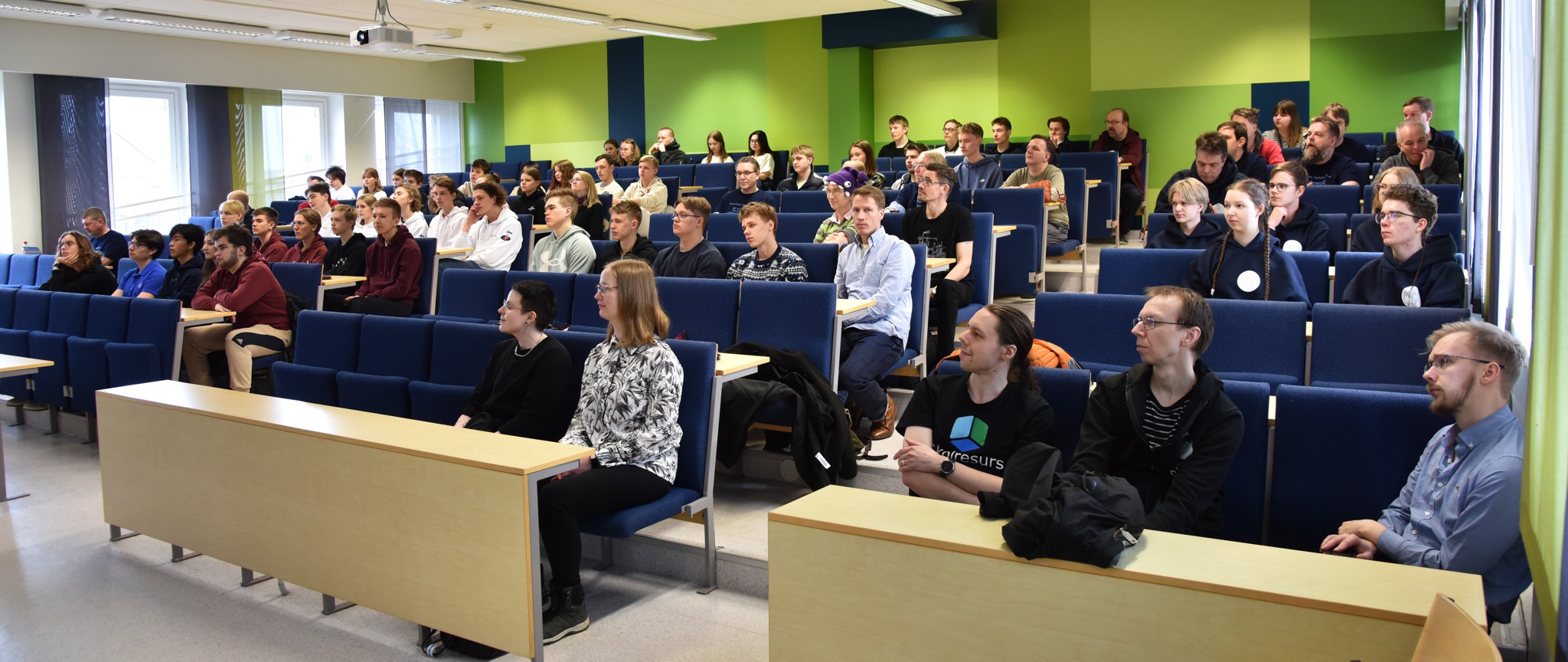
The teams of the CanSat competition 2025 are:
Team Alas, Kokkolan Suomenkielinen lukio: Youtube, Instagram
Kvanttikala, Tallinnan suomalainen koulu: instagram, facebook
LySky, Hämeenlinnan lyceon lukio: instagram
Lumat, Lahden yhteyskoulu: instagram,
LärCan, Gymnasien Lärkan: website, instagram
CurbAllSat, Vasa Övsningsskolas Gymnasium: website, instagram
OtaSat, Otaniemen lukio: instagram, TT: Ota Sat
WeCan, Tamperen klassillinen lukio: instagram, linkedin, website
Kastelliitti, Kastellin likio, Oulu: instagram
Ekotomtarna: Järvenpään lukio: instagram
CanCat 2.0, Pyhäjoen lukio: instagram, facebook
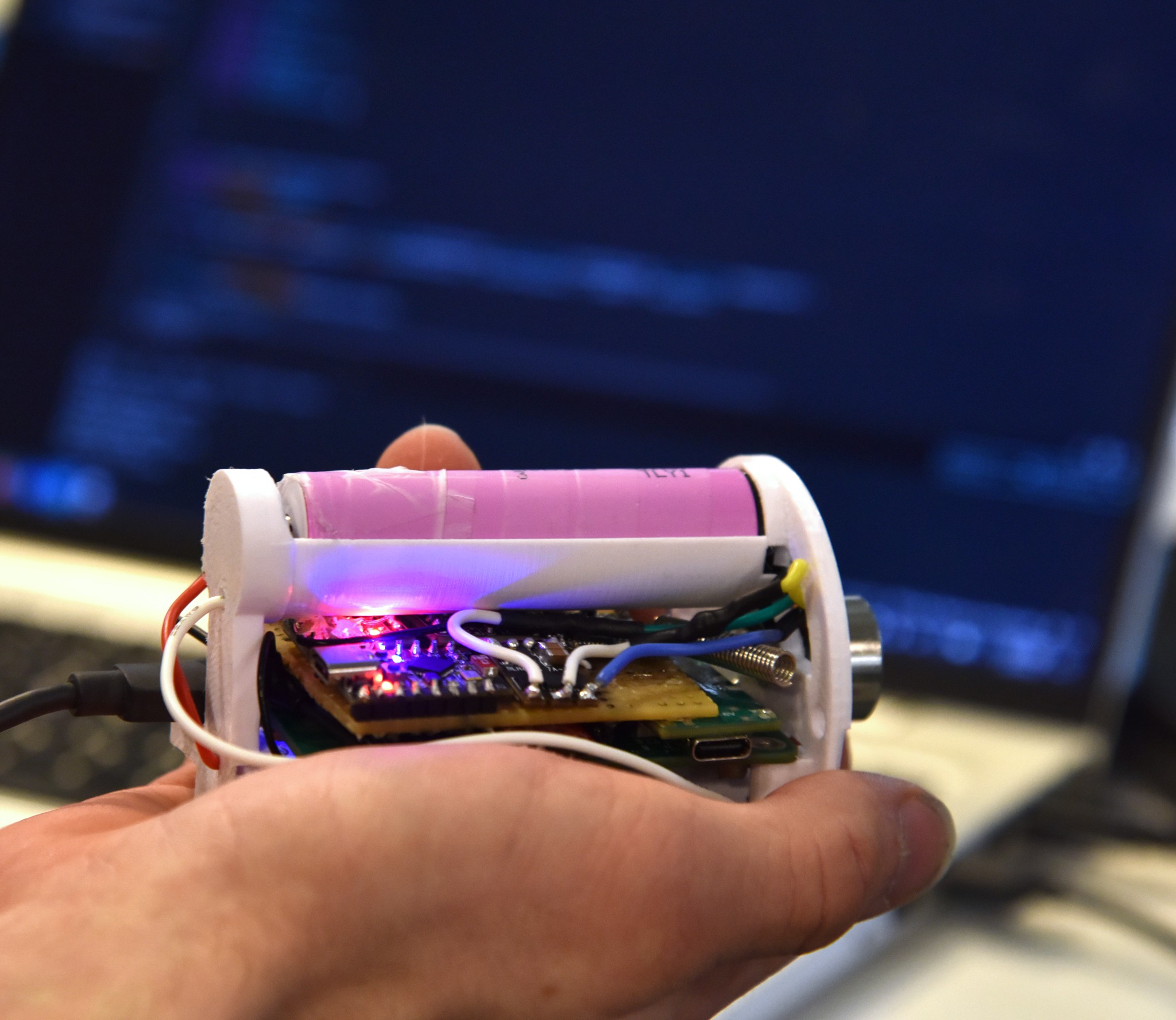
The first day of the camp includes a technical inspection by the ”Suomen Avaruustutkimusseura,” or our ”Rocket Guys,” for short. The teams also give their pre-flight presentation in front of the jury.



Friday was planned as a lovely day out at Söderfjärden. We wished for enough wind to drive the smoke away and a clear sky to make it easier to spot the CanSats.
We had a windy day with clouds some 700 feet off the ground. However, we didn’t lose a single CanSat. The last one drifted about 2 km before it hit the ground, but the team got good position signals from the CanSat. It was quickly collected.
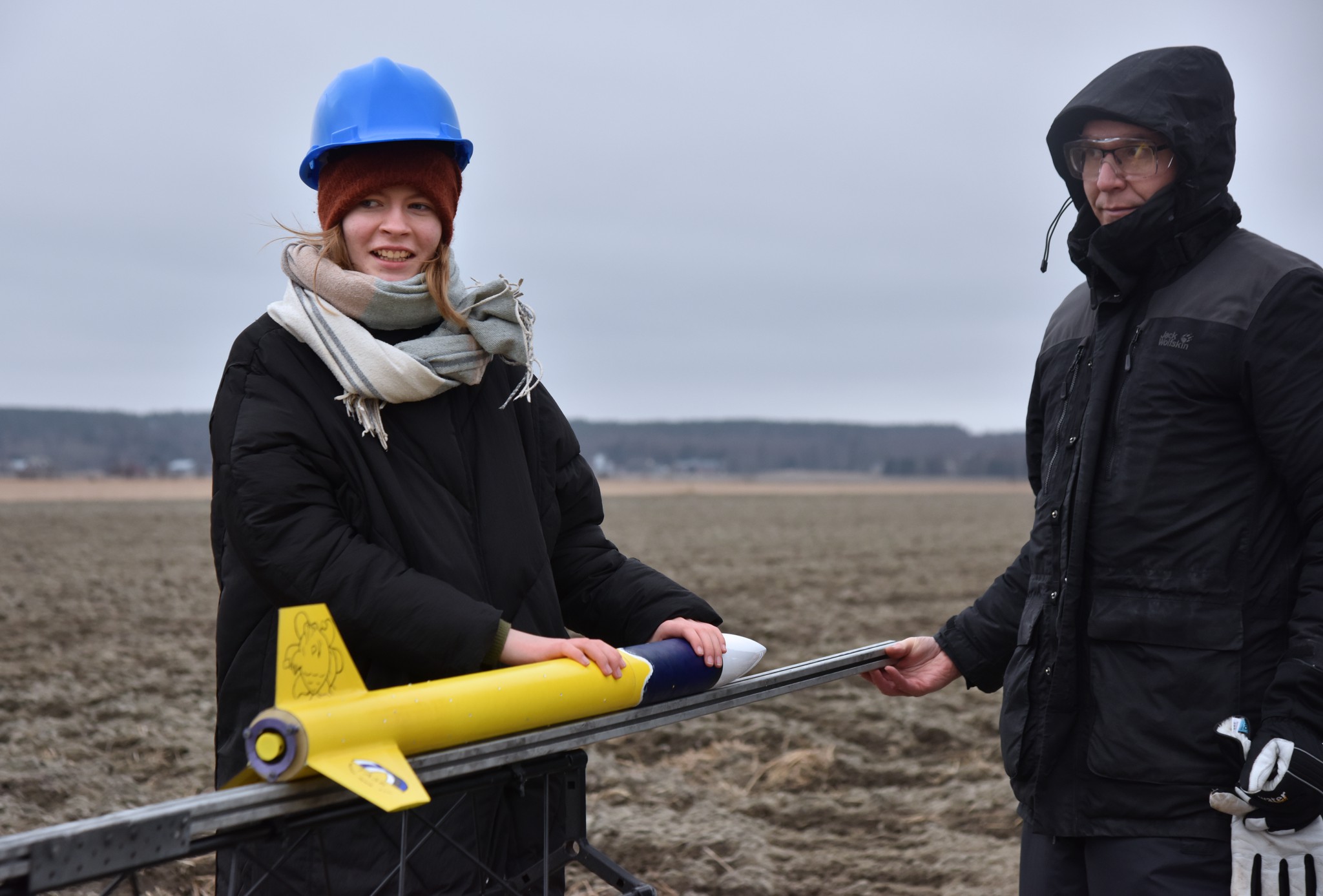


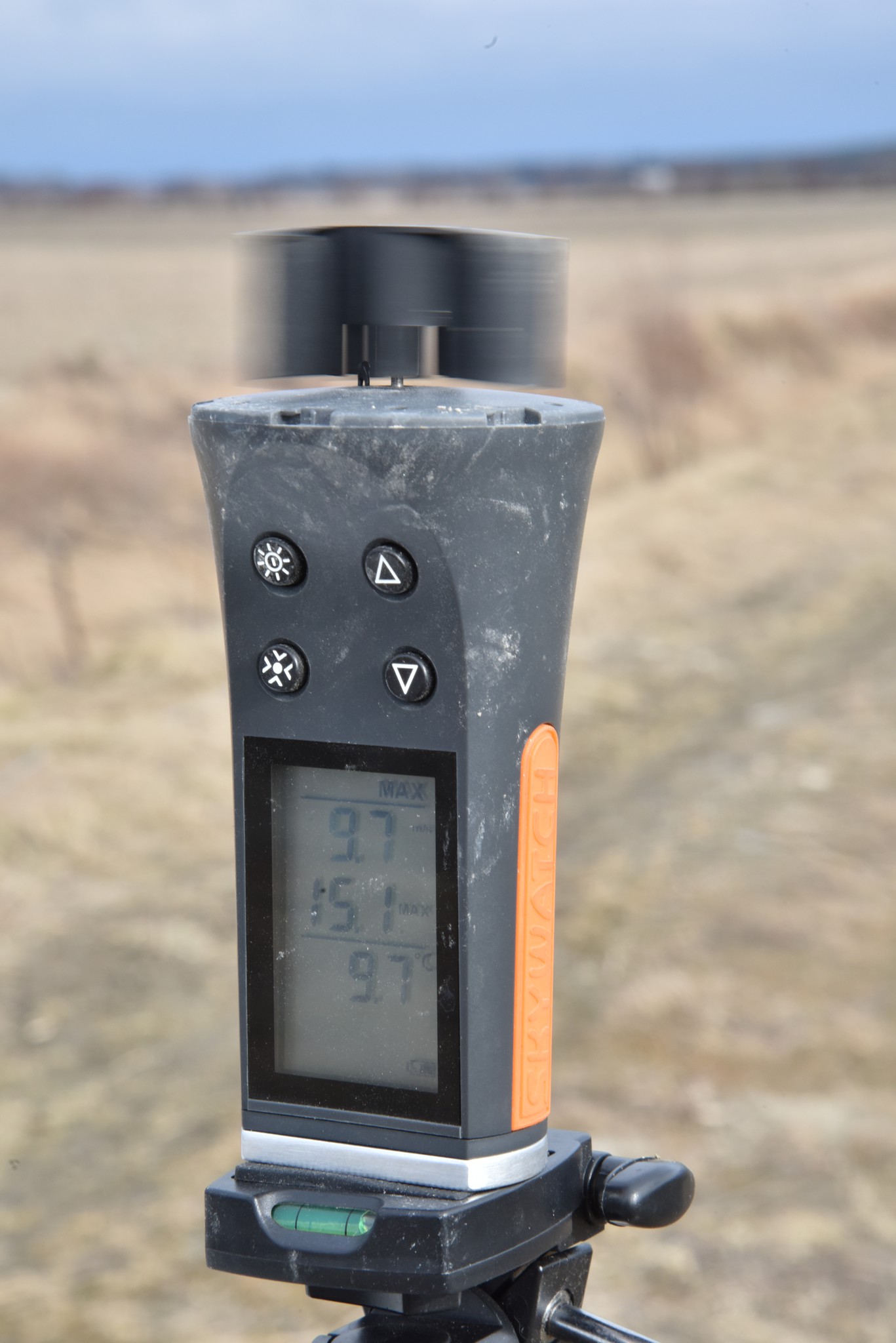
Due to the weather conditions, most teams will launch their rockets on Saturday. Some of the teams still appreciate the extra day before the launch. Things that don’t work, like a durable clock, can still be fixed. There’s nothing like the last minute.
On the other hand, a postponed launch reduces the time needed to prepare for the final presentation.
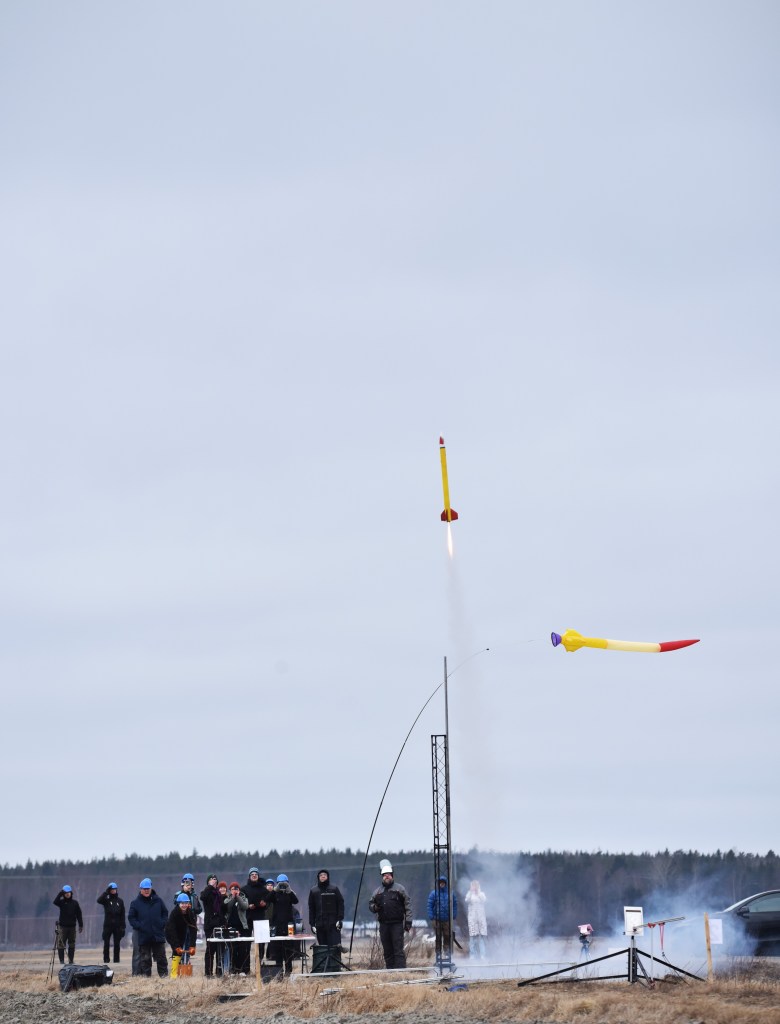
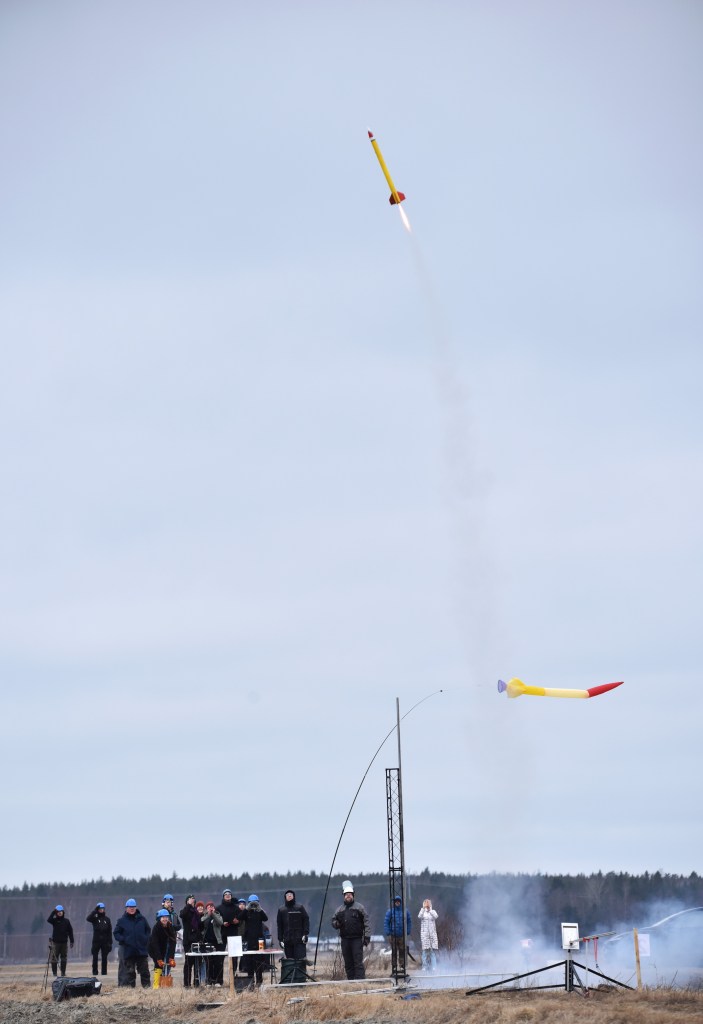
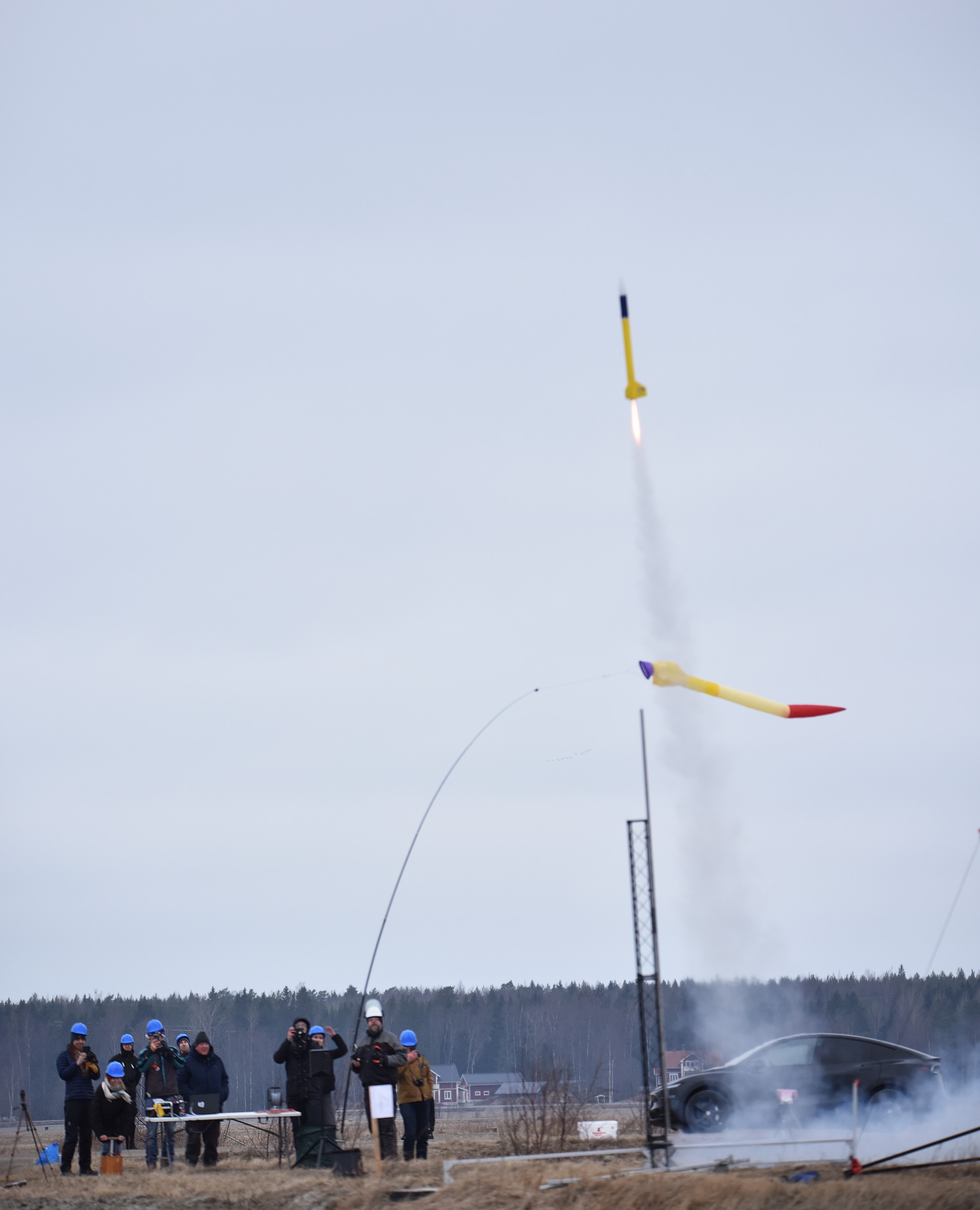
The images above show how a rocket turns against the direction of the wind when the fins are hit by the wind after the rocket has cleared the tower. During this launch, the ”normal” motor was used. The other rockets got motors with propellant that had a rapid, almost explosive burn. They went straight up. On the other hand, the payload experienced an acceleration close to 30 G.

On Friday evening, we were invited to the University of Vasa, where the professor of the year, Dr. Heidi Kuusniemi, gave a lecture about space engineering and space business.
After the lecture, it was time for some arcade games…
Saturday. Another day in parad… at Söderfjärden
The wind also made everything hard this day. But we are lucky to have our amazing ”Rocket Guys,” officially representing ”Suomen Avaruustutkimusseura” or ”Sällskapet för Astronautisk forskning i Finland.” They coach the teams in their work and do everything in their power to successfully launch a vehicle that takes the CanSat to the desired altitude.

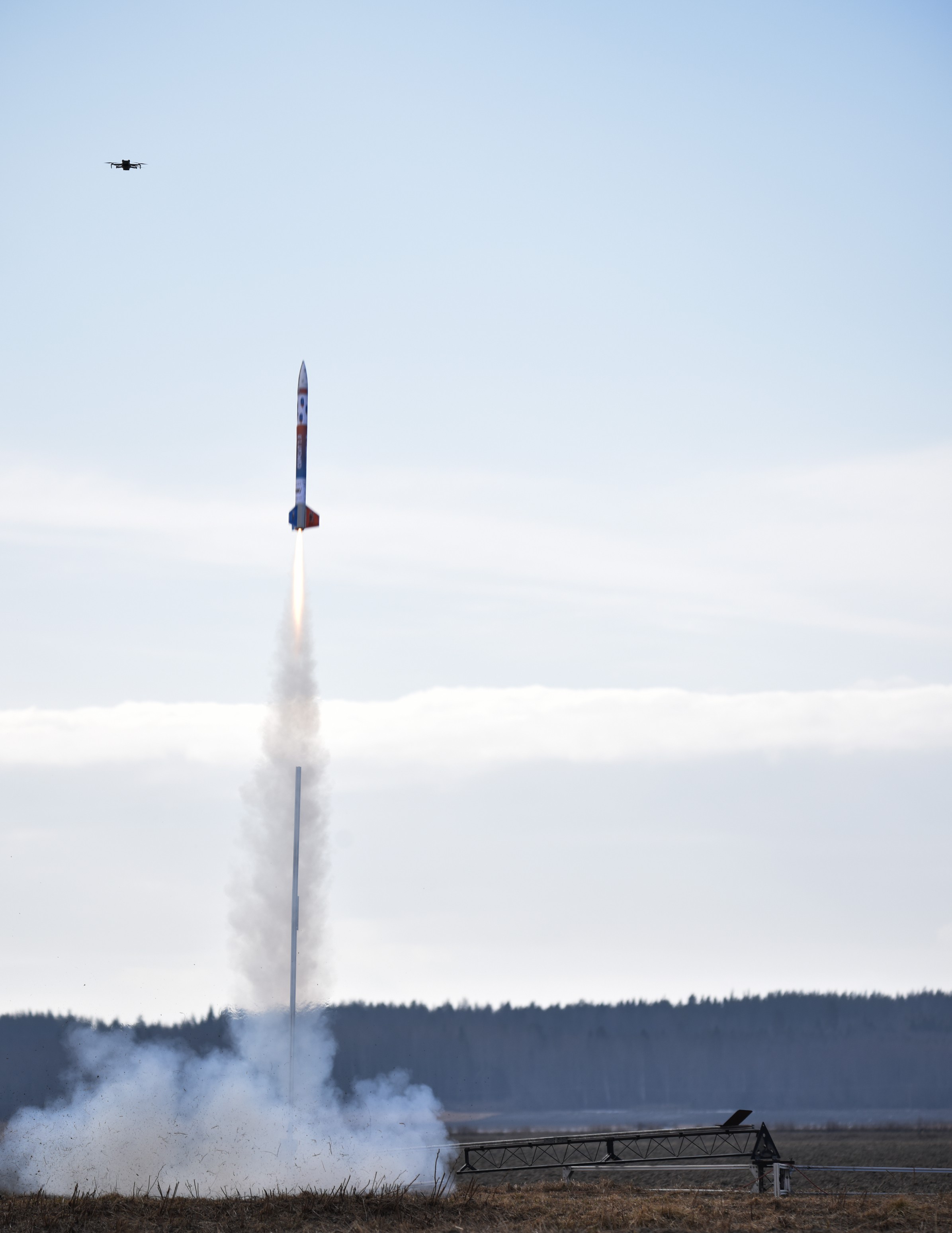


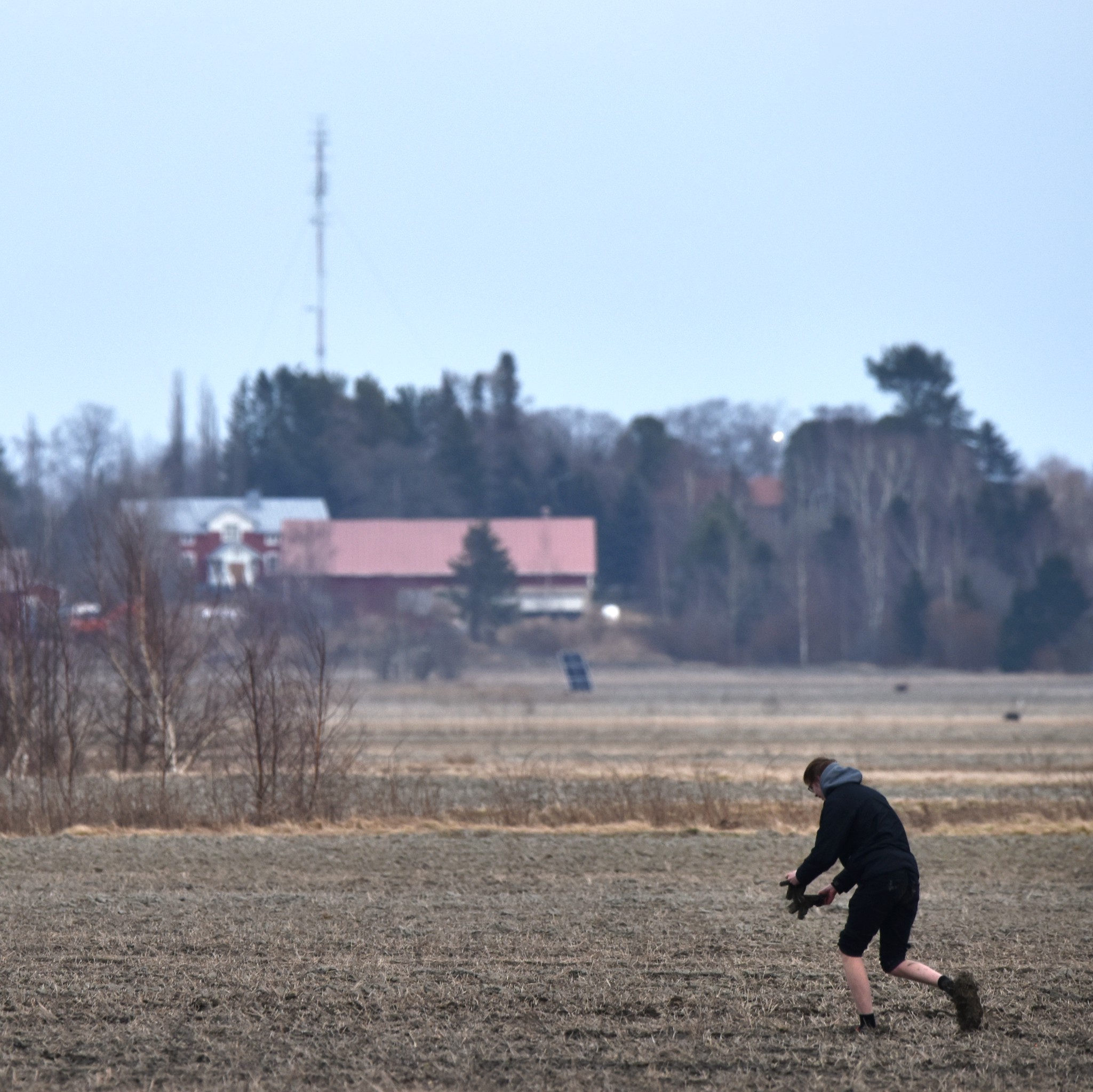

One rocket and one CanSat were lost due to the wind. They simply drifted too far and probably into the woods. Considering that 11 CanSats were launched, two of them twice, it’s definitely a success under the circumstances.


After a long day of work, we got lectures at Wasa Innovation Center and dinner at Bock’s. After that, the work continues. There is time for the final presentations on Sunday morning.
Final day – Presentation day
Some of the teams got an excellent set of data from the launch. Some teams did not.
”Anything including a rocket is a risky business.” That doesn’t mean the rocket used to fail. This year, too, not a single rocket failed. But it’s a rough lift to the clouds. The drop test, done at the technical inspection, is smooth compared to the rocket’s 30 Gs.
However, in any space-related project, you do your very best with the data you’ve got. That’s what the teams did. According to the jury, it was a very open game this year.
More images are available at Flickr.


Every team got 10 minutes for their presentation, and then the jury had three minutes to ask questions. 11 presentations took time, but every team had its own way of presenting its results and analyses. I assure you, it never got boring.

And the winners are:

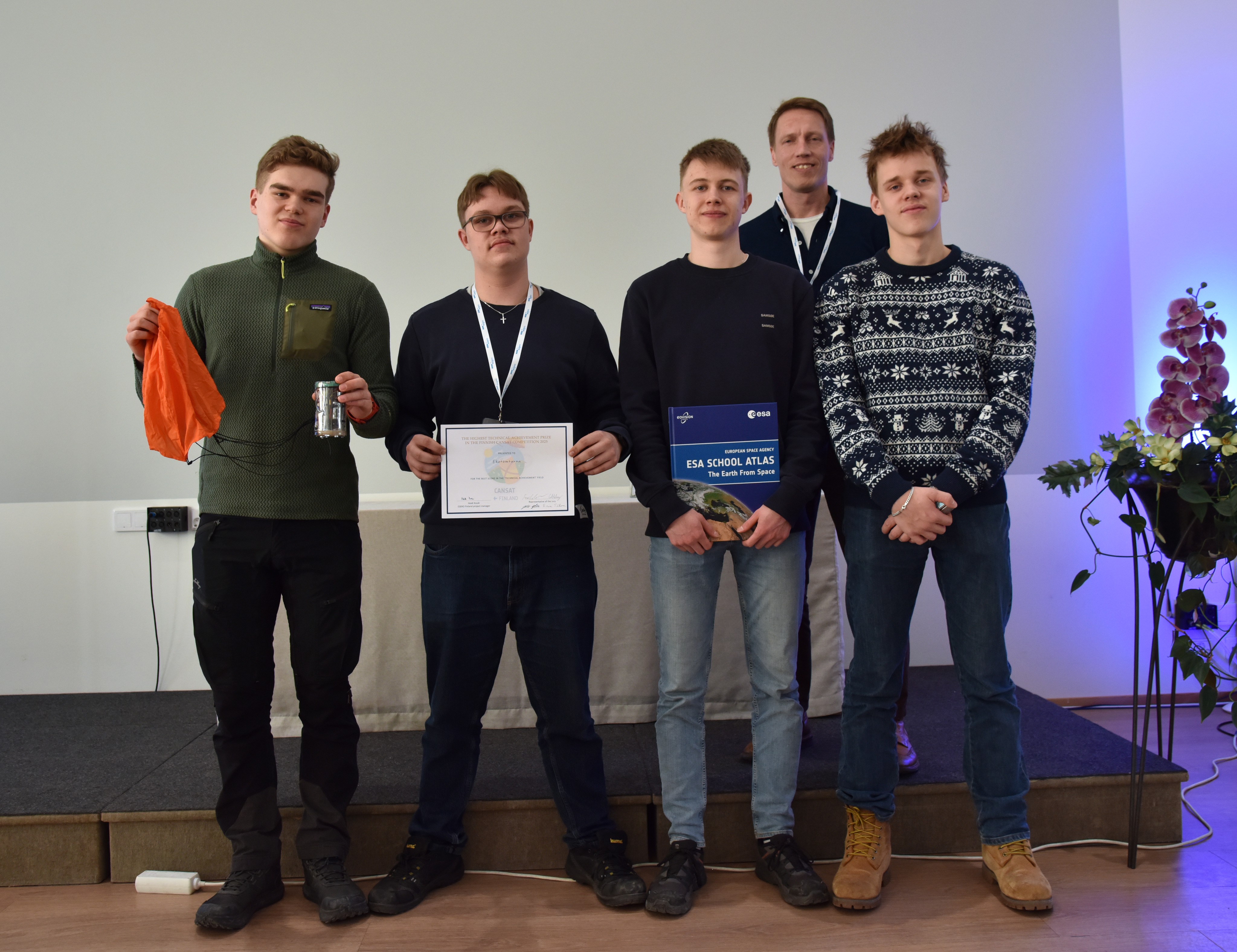
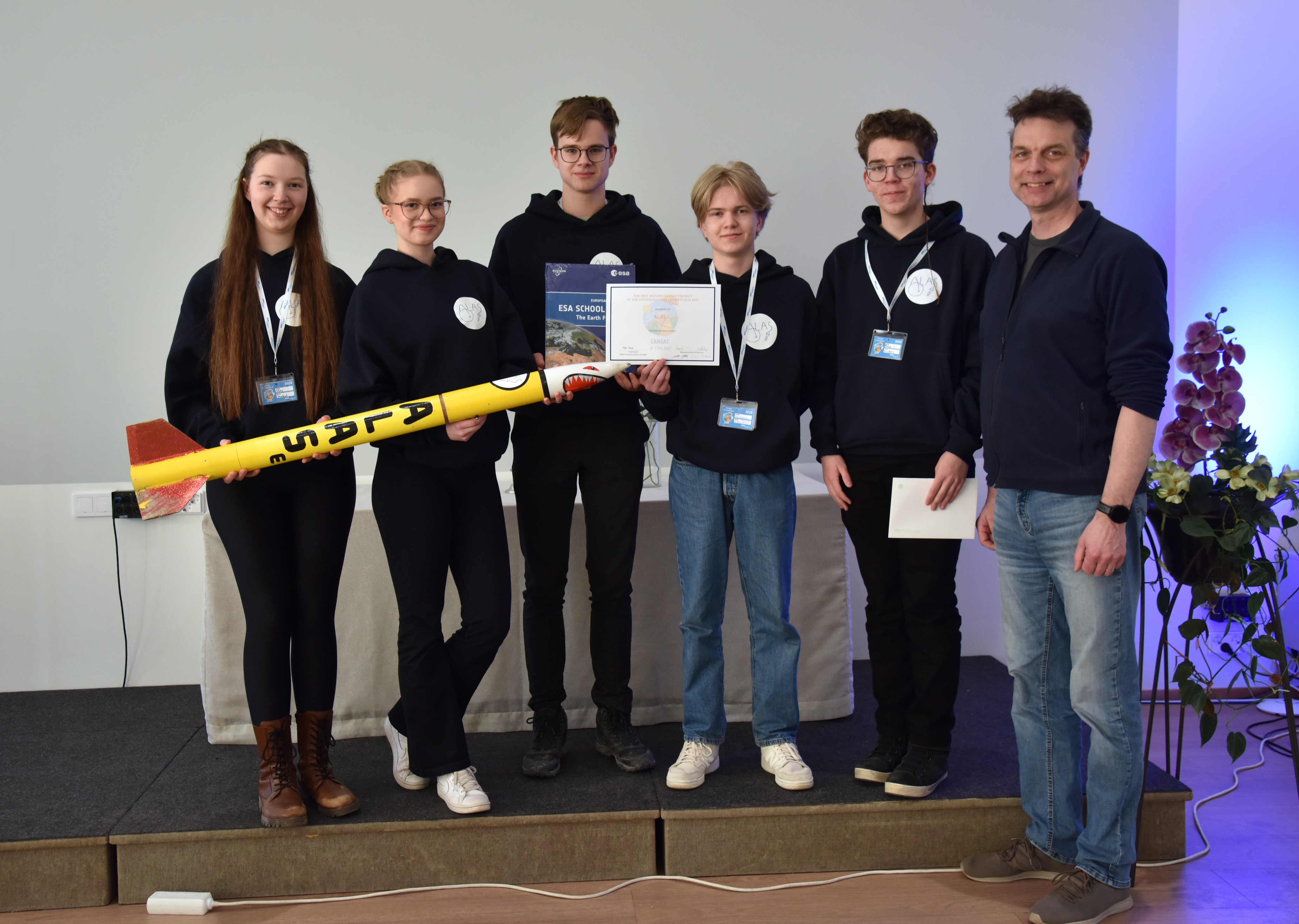
Don’t worry! We have already set the date for the ESERO Finland CanSat competition 2026. We really do hope we get all the green lights needed to make it happen.
Jan Holmgård
ESERO Finland, education officer
 edugalaxen.com
1 kommentar